
Cremation Association of North America (CANA)
  • About CANA
    • Staff List
    • Code of Cremation Practice
    • Position Statements
    • History of Cremation
    • Board of Directors >
      • Get Involved with CANA
    • Media >
      • News
    • CANA Member Directory
    • Contact Us
  • Choosing Cremation
    • Transport of Cremated Remains
    • Cremation Process
    • Arranging for Cremation >
      • Memorial Options
      • Cremation Services
      • Planning and Payment
      • Choosing a Provider
    • Find Local CANA Members
  • For Practitioners
    • Why Join CANA? >
      • CANA Member Benefits
      • Member Login
    • Self Care for Funeral Professionals
    • Create Your Profile
    • CANA Publications >
      • CANA Cremationist Magazine
      • Blog
      • CANA's Cremation Brochure Series
      • Industry Statistical Information
    • CANA Marketplace
    • 2026 Media Kit
    • Crematory Management Program
    • CANA PR Toolkit
    • CANA Connect - Member Forum
    • Find Local CANA Members
  • Education
    • Access Your Online Courses
    • Crematory Operator Certification >
      • COCP - In English
      • COCP - en français
      • COCP - en Español
      • Pet Cremation (CPCO)
      • Alabama Refresher Program
      • Illinois Refresher Course
    • Cremation Specialist Certification
    • Business Administration Certification
    • Continuing Education Online
    • Pet Aftercare
    • Natural Organic Reduction >
      • Natural Organic Reduction Operations Certification
    • Digital Certificates & Badges
    • Academic Scholarships
    • Calendar of Events
    • Webinars
    • 2026 Symposium
    • 108th Convention
  • Career Center
  • About CANA
    • Staff List
    • Code of Cremation Practice
    • Position Statements
    • History of Cremation
    • Board of Directors >
      • Get Involved with CANA
    • Media >
      • News
    • CANA Member Directory
    • Contact Us
  • Choosing Cremation
    • Transport of Cremated Remains
    • Cremation Process
    • Arranging for Cremation >
      • Memorial Options
      • Cremation Services
      • Planning and Payment
      • Choosing a Provider
    • Find Local CANA Members
  • For Practitioners
    • Why Join CANA? >
      • CANA Member Benefits
      • Member Login
    • Self Care for Funeral Professionals
    • Create Your Profile
    • CANA Publications >
      • CANA Cremationist Magazine
      • Blog
      • CANA's Cremation Brochure Series
      • Industry Statistical Information
    • CANA Marketplace
    • 2026 Media Kit
    • Crematory Management Program
    • CANA PR Toolkit
    • CANA Connect - Member Forum
    • Find Local CANA Members
  • Education
    • Access Your Online Courses
    • Crematory Operator Certification >
      • COCP - In English
      • COCP - en français
      • COCP - en Español
      • Pet Cremation (CPCO)
      • Alabama Refresher Program
      • Illinois Refresher Course
    • Cremation Specialist Certification
    • Business Administration Certification
    • Continuing Education Online
    • Pet Aftercare
    • Natural Organic Reduction >
      • Natural Organic Reduction Operations Certification
    • Digital Certificates & Badges
    • Academic Scholarships
    • Calendar of Events
    • Webinars
    • 2026 Symposium
    • 108th Convention
  • Career Center

8 CHALLENGES LEADERS FACE

1/30/2019

 
Picture
I had the pleasure of presenting for CANA in 2009, and the past ten years have seen changes across the business world. What’s new or different about leadership today? And what are the biggest challenges leaders face in their businesses and communities?
In my work I advise hundreds of leaders each year. From their experiences, questions, hopes and fears, combined with the assessments of those they lead about what their leaders do well and what they do poorly, I’ve compiled eight challenges I hear most often and some suggestions about what to do to find your solution:
  1. USE OF OUTDATED TIME MANAGEMENT THINKING.
    The research is clear: multitasking is a myth – switching between two tasks can take up to 40% longer to complete both. Life balance doesn’t make sense either. It is about life design: devoting the right number of hours and energy to the most important things. It is time to reexamine outdated beliefs about time management and productivity. The ability to focus intently (“single-tasking”) on what is important should be at the top of your productivity list. And don’t feel guilty if your life isn’t balanced if it is well designed.
  2. TREATING THOSE THEY LEAD AS “FOLLOWERS.”When asked what I think is the biggest change in leadership, my answer is followers. Those we lead increasingly resist thinking of themselves as followers, and for good reason. This is a limiting term that poorly represents the relationship we need. Employees want to be (and deserve to be) thought of as contributors, colleagues and team members. The concept of “following” to those we lead is as negatively tinged as referring to those in customer service as “servile.” Unless you’re a religious guru, you are better served leading a team of contributors than a band of followers.
  3. FEAR OF THE GREAT UNKNOWN.No leader likes uncertainty but today the size and impact of the unknown can be more devastating than in the past. Nassim Nicholas Taleb wrote the definitive book about overconfidence in our ability to predict, anticipate and plan. He describes the improbable black swan: an unpredictable or unforeseen event, typically one with extreme consequences. Many leaders act as if black swans never happen, or can be avoided, but leadership is as much about taking action in the face of the unknown as it is gathering information to eliminate the unknown and mitigate consequences. No leader is clairvoyant, so he or she must accept the real limitations of knowledge about the future and act accordingly.
  4. A FALSE DICHOTOMY OF ETHICS.Trying to separate personal ethics from professional ethics is a bad idea. There are just ethics, and trying to apply two different standards isn’t just confusing, it is wrong. Why would you trust someone at work that you know to be a conniving liar in his or her personal life? And why would you allow something that you know is wrong to happen at work? One psychologist calls it the normalization of deviance: making it acceptable to do at work what is wrong to do outside work. Leaders work hard to create what I conversely call the “normalization of integrity.” Without clearly defined values that are lived and observed by others, ethics slip dangerously.
  5. OVEREMPHASIS ON GENERATIONAL DIFFERENCES.Not that long ago leaders often seemed to ignore generational differences. The pendulum has swung to another extreme. There seems to be a belief that everyone is so different we can’t effectively lead! Generations are different, and understanding those differences can provide effective tools for communication and collaborating better. At the same time people regardless of age share much in common: the need to belong to a winning team, meaning in their work, satisfaction in the jobs they do, and much more. Leaders must balance understanding and using differences and unifying their teams with shared interests and beliefs.
  6. EMPLOYEE ENGAGEMENT.It is as important as competing for talent, a common dilemma according to my clients. One of the biggest myths I encounter is the belief that if you just get the best people on your team, your job is done. John Wooden wisely noted that he didn’t want the best players on his team. He wanted the players that made his team best. That points to the importance of engagement and teamwork. Talent is a start, but it is never enough. Divisive star players and disengaged genius are both liabilities. Good leaders find the best people and then focus on keeping them engaged.
  7. LACK OF PREPARATION TO SUCCESSFULLY LEAD.My research shows that only one in four leaders feels prepared when they assume formal leadership positions. Leaders need to learn to lead before they get their marching orders, not after. And that isn’t accomplished just through books and coursework but through real world projects and assignments where leadership skills are developed. If you don’t give your team members a chance to lead before they become formal leaders, they will lack the skills and confidence to lead when they move into management.
  8. BUSINESS MODEL INNOVATION.While speaking to a global technology company, I learned that their executives were more worried about innovation in business models than the impact of technology. A business model is the way a company makes money, and can be used defensively against competitors, to reinvigorate revenues in declining markets, or as a way of exploring new opportunities. Few business models are exempt from the need to be revisited and revised regularly. Business model innovation is increasing at lightning speed and may well be the single greatest high level business challenge leaders face.
Which of these challenges are you facing? And what are you doing to meet them head on?
Here’s a final thought: no challenge + no change = boredom. You might wish for fewer challenges than you currently face, but ultimately dealing with challenge and change is the essence of leadership.

Want to talk leadership? CANA’s 2019 Cremation Symposium highlights business innovation tactics, maintaining your leadership edge, hiring well, and mentoring across generations. Mark won’t be joining us, but we have experts from across our profession to talk these issues and more. Join us next week in Las Vegas!.
​
Excerpted from The Cremationist, Vol 52, Issue 4: “10 Challenges Leaders Face” by Mark Sanborn.
Picture
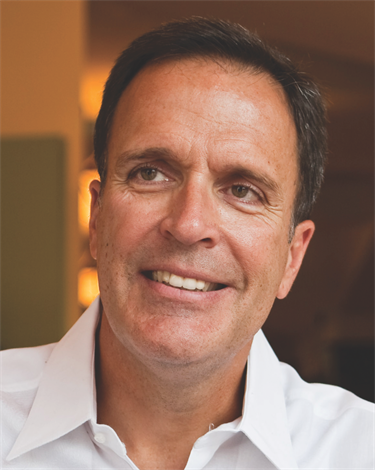
Mark Sanborn, CSP, CPAE is president of Sanborn & Associates, Inc., an idea studio for leadership development. He is an award-winning speaker, internationally recognized authority on leadership and the author of the bestselling books The Fred Factor and You Don’t Need a Title to be a Leader. To obtain additional information for improving yourself your business (including free resources), visit www.marksanborn.com.

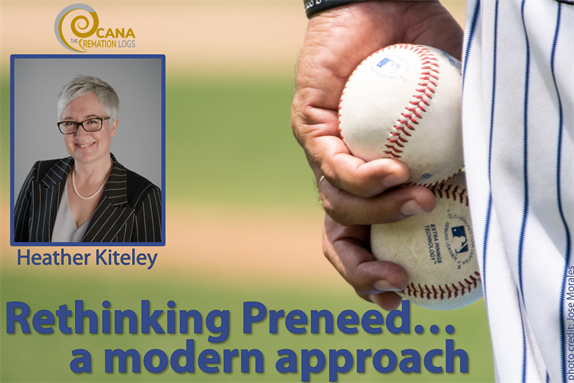
RETHINKING PRENEED… A MODERN APPROACH

1/16/2019

 
Picture
Superstar sellers, unreliable incomes, infighting amongst staff, confusing metrics… the list of problems in the world of preneed sales can be exhausting. The world of preneed is full of myths, misnomers, and fake news. These things can foster unrealistic expectations, or worse, can create significant barriers for managers responsible for their preneed programs and for regular folks seeking a meaningful career in funeral sales.
​
To find the solution, let’s take a look at the following formulas:
AC / #AA = C%
#CG / C% = RA
AC / AAB = CC%
RA / CC% = RLG
No, these are not a new batch of curse words or hashtags, they are tools you can use to maximize your preneed potential. They may look intimidating, but they are easy-to-use formulas that allow you to use real data to drive real sales.

play moneyball

But let’s digress for a moment.

Most readers will have seen or heard of the movie Moneyball. The film dramatizes the real-world example of how, in 2002, the Oakland Athletics baseball team radically changed the traditional game of baseball by using statistics and mathematics (called sabermetrics) to scout and analyze players.

What they realized was that traditional methods of scouting relied heavily on biased or incomplete information. This led other teams to overpay players in the hopes of buying success. In contrast, the Athletics adopted sabermetrics to build formulas using quantitative analysis of different player abilities. By building the right formulas, they were able to put the right pieces together to build success. This new method translated to on-field success; the newly-built Athletics tied the longest winning streak in American League history, and clinched the 2002 American League West title.

How does this concept translate to preneed sales? To quote a line from the movie: “Your goal shouldn’t be to buy players (i.e., counselors), your goal should be to buy runs (i.e., appointments).”
​
Using statistics and mathematics, a successful preneed program can be developed to reliably predict success and take the mystery and magic out of the game of preneed.

​METRICS VS. INTUITION

So where do we start? The most basic metrics of a successful preneed program can be distilled into a simple mathematical equation:
Actual Contracts divided by Actual Appointments = Close %
AC / AA = C%
This should be the launching point for the development of a simple formula to accurately predict the number of contracts a program can produce annually. All managers responsible for preneed programs should have a reliable way to accurately measure the closing percentage of each of their counsellors. Further, they should know their closing percentage for every type of lead. For example, the closing percentage for call-in and walk-in business should be over 80% whereas the closing percentage for a more challenging lead, like direct mail, will be significantly lower. When developing your program, this metric can be used to strategically apply human resources to the appropriate lead source.

​TEAMWORK VS. SUPERSTAR

When developing a preneed team, many people are overlooked for a variety of perceived reasons: they’re too quiet, they aren’t motivated, funeral directors aren’t good at sales, etc. However, it is unrealistic to expect that one person can bring all of the necessary traits or skills to develop a successful preneed program. In the same way that the use of sabermetrics in Moneyball proved that a baseball team doesn’t need to have a superstar to win, the game of preneed doesn’t need to have a superstar seller to be successful.
​
Once you have figured out your closing percentage, you can safely estimate the number of appointments you need to book to reach your goals. This formula looks something like this:
Contract Goal divided by your Closing Percentage = Number of Required Appointments
#CG / C% = RA
This means that if you have an 80% closing percentage and your goal is to sell 200 contracts, you need to book 250 appointments to meet your goal.
​
Working backwards, you then need to know how many calls you need to make in order to book those 250 appointments. This can be tied to your call conversion percentage, which can be calculated by using the following formula:
Actual Calls divided by Actual Appointments Booked = Call Conversion Percentage
AC / AAB = CC%
If you make 100 calls that result in 15 appointments booked, your Call Conversion Percentage is 15%. If we tie this percentage to the previous example, where your number of required appointments was 250, this means that you’ll need to have 1,667 leads to call to meet your goal:
Required Appointments divided by Call Conversion Percentage = Required Lead Generation
RA / CCP = RLG
Each organization will generate leads differently, but the best way to build leads is to diversify your lead sources. Consider incorporating direct mail campaigns, social media, referral programs, group seminars and presentations into your marketing mix. You can even apply Moneyball-style formulas to calculate how many leads you’re generating and where they’re coming from.

putting it all together

Using these formulas, or designing your own, can reap huge benefits for your organization. Using a reliable and consistent approach will put an end to the “feast or famine” results that are often seen when working campaign to campaign. Year after year, your contracts and volume will stabilize and your success will become much more predictable.

For more information on how “hacking your process” can improve your preneed business and help the families you serve, check out my session “The Art (and Science!) of Creating a Successful Preneed Program” at this year’s CANA Preneed Summit!

Are you looking for more about creating a preneed strategy that makes a difference? The Art of Selling Cremation: A Preneed Summit is back for the second year to with a one-day intensive on today's pressing preneed topics. Join colleagues in Las Vegas on February 5th, 2019 – see the full schedule at www.cremationassociation.org/CANAheroes.

Picture
Heather Kiteley is the President of Guaranteed Funeral Deposits of Canada (GFD), bringing over 25 years of experience in the field to the largest organization for managing preneed funeral trust funds in Canada. Heather blends her unique background and experience together with a skilled team of professionals at GFD to provide members with a trusted resource to help ensure their preneed programs succeed.

    RSS Feed

    The Cremation Logs Blog

    Cremation experts share the latest news, trends, and creative advice for industry professionals. Register or log in to subscribe and stay engaged with all things cremation.

    Categories

    All
    Aftercare
    Alkaline Hydrolysis
    Arranging
    Body Preparation
    Business Planning
    Celebrants
    Cemetery
    Communication
    Consumers
    Covid19
    Cremation Specialists
    Education
    Embalming
    Events
    Green Practices
    Grief
    Guest Post
    History
    Hr
    Inspiration
    Installation
    Leadership
    Manufacturers
    Marketing
    Memorialization
    Personalization
    Pets
    Preplanning
    Processes And Procedures
    Professional Development
    Public Relations
    Safety
    Selfcare
    Services
    Sesquicentennial
    Statistics
    Storytelling
    Suppliers
    Technology
    Tips And Tools
    Transportation

    Archives

    November 2025
    October 2025
    September 2025
    August 2025
    July 2025
    June 2025
    May 2025
    April 2025
    March 2025
    February 2025
    January 2025
    December 2024
    November 2024
    October 2024
    September 2024
    August 2024
    July 2024
    June 2024
    May 2024
    April 2024
    March 2024
    February 2024
    January 2024
    December 2023
    November 2023
    October 2023
    September 2023
    August 2023
    July 2023
    June 2023
    May 2023
    April 2023
    March 2023
    February 2023
    January 2023
    December 2022
    November 2022
    October 2022
    September 2022
    August 2022
    July 2022
    June 2022
    May 2022
    April 2022
    March 2022
    February 2022
    January 2022
    December 2021
    November 2021
    October 2021
    September 2021
    August 2021
    July 2021
    June 2021
    May 2021
    April 2021
    March 2021
    February 2021
    January 2021
    December 2020
    November 2020
    October 2020
    September 2020
    August 2020
    July 2020
    June 2020
    May 2020
    April 2020
    March 2020
    February 2020
    January 2020
    December 2019
    November 2019
    October 2019
    September 2019
    August 2019
    July 2019
    June 2019
    May 2019
    April 2019
    March 2019
    February 2019
    January 2019
    December 2018
    November 2018
    October 2018
    September 2018
    August 2018
    July 2018
    June 2018
    May 2018
    April 2018
    March 2018
    February 2018
    January 2018
    December 2017
    November 2017
    October 2017
    September 2017
    August 2017
    July 2017
    June 2017
    May 2017
    April 2017
    March 2017

Picture
Picture
Picture
Picture
Picture
Picture
Copyright 2000-2025 Cremation Assoc. of North America. All rights reserved.
499 Northgate Parkway, Wheeling, IL 60090-2646
v 312.245.1077 f 312.321.4098
[email protected]
Privacy Policy | Liability Disclaimers

Quick Links

home
about
media
statistics
contact us
login
Picture