
 Millennials have been made fun of and vilified since they started entering the workforce. They have been stereotyped as lazy and entitled employees who are quick to trade loyalty for the ability to jump into what’s shiny and new. They want work-life balance, flexible schedules and a casual dress code. But like most things, it is not quite that simple. Employers today are struggling to hire and retain employees. Many think this struggle is due to the millennial employee, but the workforce is the most involved it has ever been. Defining the workforce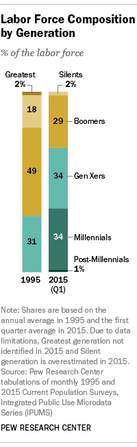 One size doesn’t fit all when it comes to today’s workforce or talking about the different generations. For the first time in history, there are five generations in the workplace. They are:
FIVE GENERATIONS MEANS FIVE APPROACHESFive generations of employees means five approaches to work, which makes it difficult to satisfy everyone. It is important to note that labels that apply to the different generations do not necessarily contain every member of a given generation. Rather, those labels should be considered hints on how to most effectively connect and work with people. four quick tips on managing millennialsMillennials currently make up the largest portion of the U.S. workforce. They are known for their familiarity with the internet, social media, and digital devices. As a generation that grew up on stickers and participation trophies, millennials have come to place high importance on collaboration, teamwork and helping the greater good. So what are the things that you're putting in place for these workers? Because if you’re thinking, “well, I'll just wait.” What you're waiting for is not necessarily coming. Millennials make up about 75% of the workplace, there are more MBAs in the millennial generation than have no degrees at all, 30% of them are living with family, and 36% have tattoos. Planning for the future includes the millennial and gen z employee. ENCOURAGE THEIR “CAN-DO” ATTITUDE Millennials want to know that their work is valued, and they are somehow making a difference. The best way to connect with your millennial colleague is to explain the big picture to them and let them know how their work impacts the families or communities you are serving. They are looking to see that the work that they do adds value to something. To me what this is: Are there things that matter to those employees? If there are, can they be in charge of it. For example, something as simple as doing a can drive. One funeral home did Wreaths Across America and they put their millennial employee in charge of that. They loved it, because they bridged that gap between work and something socially responsible and doing something different. What we find is that the values millennials, and even Gen Z, will go after are the ones that are actually trying to accomplish something versus something that just wants to make money. So, if we can have that kind of balance between those things, make it available to them. Plus, doing drives like this — can drives, clothing drives, things like that — it also boosts the funeral home as well. CREATE AN ENVIRONMENT THAT IS POSITIVE AND CONSTRUCTIVE Millennials are accustomed to using technology in their everyday lives, and they expect the same at work. As digital natives, they are comfortable learning and utilizing new technology. If different procedures can be digitized, these employees want the workplace to invest in the new technology and innovations. Mobile integration and modalities are expected, not only by employees, but also by the millennial family members you serve. They've grown up surrounded by digital devices, but ‘digital natives’ does not mean that they are technologically savvy. If you want them to help you on Facebook and Instagram, that's your group. But if you expect that they are going to somehow run your website, that they're going to fix your printer, got another think coming. The millennials and the Gen Z at Worsham College, if the printer does not work, they will just look at it and go, “it's not working. It's not working.” I am probably more technologically savvy, because I remember dial-up and when I had to read descriptions and put things together. ENCOURAGE THEM TO GIVE THEIR OPINIONS AND IDEAS Millennials grew up with parents and teachers who facilitated open communication techniques. They are used to having their opinions heard and having a seat at the table. While millennials do favor encouraging feedback, they also want consistent communication. They want to be informed about the job and the employer’s expectations and have regular meetings to check in on their progress. They want both instruction and independence, so teach them through conversations, not commands, allowing for feedback and repeating. Give them measurable goals and help them hold themselves accountable for achieving them. Do not threaten punishment if they make mistakes but give them the confidence to take responsibility for their actions, and the support they need to fix their mistakes. What are the needs of our millennial generation? They need coaching and mentorship. They want to develop their skills and know how they're progressing. I'll say it like this, everyone that comes into mortuary science school — the ones that graduate and move on — they want to be you. They want to be funeral directors. That's why they go to school. So they are excited, they can't wait to start. The idea of you coaching and mentoring them matters a lot to them, because it's such a part of who they are. And it's what they want to see and be a part of. ACKNOWLEDGE THEIR IMPACT If a millennial is doing a good job, they want to know. Acknowledge hard work through recognition programs and performance-based incentives. However, this recognition should not be competitive. It is more about them staying motivated rather than outperforming their co-workers. Many of our students work at local funeral homes, and we had a student who worked a visitation. When he came to school the next day, he says, “I had a great day at work yesterday. A funeral director gave me this.” And he holds up above his head, as if he just had won the lottery, a $10 Subway gift card. All our students were so excited, so happy, because here's the two things that happened in that moment: he was recognized and he was appreciated. It doesn't have to be huge. It doesn't need to be these massive rewards. It just needs to be something and you're saying, “Yes, I see what you're doing.” MORE THAN A LABELIt’s easy to stereotype generations because it makes some intuitive sense that people born in similar eras would have similar skills, experiences and attitudes. But good management and a positive work environment matter more than how many generations are co-existing under one roof. So, for example, if you have an expectation of how you want to receive communication, you need to tell them, If they don't follow your policy, they're a bad employee, get rid of them. But most of the time, the generations are actually be able to change and communicate with you the way that you want. Many times the actions and behaviors of the millennial can seem like they are disengaged or disinterested in their job but that is not entirely accurate. For example, many funeral directors say that once a millennial completes their task list they grab their phone and do not look around to find additional tasks. My response and suggestion is that most of your younger employees have been taught that once you complete a task list you are done. So if you want them to find additional tasks ask your millennial what is missing from the task list. Make them part of the discussion. When funeral professionals learn the right approaches to working with the different generations it alleviates a great deal of stress and frustration in the workplace. Acknowledging the different styles of employees allows for them all, regardless of their generation, to contribute and be a meaningful part of the workplace. Understanding generations particularly around communication, trust and decision-making can go a very long way in helping funeral professionals understand how to better connect with different generations of employees and families they serve. At a time when the profession continues to be more consumer-centric, the potential benefit of better communication is significant. Regardless of the generation most all people want the same thing: to work in a place that treats them fairly and values their work. Portions of this post excerpted from Leili's presentation at CANA's 103rd Cremation Innovation Convention on "Hiring and Retention of Today’s Employee" where she discussed how to effectively communicate and integrate the next generation of funeral directors into the workplace. Happy American Business Women's Day to Leili and all of the women leaders in funeral service with thanks for all you do! Your employees are your number one asset, and unfortunately, not all business owners and managers recognize this. The funeral profession sees too many graduates leaving the profession citing long hours, low pay and poor company culture. Three Tools for Improving Your Business examines how culture and competencies go hand in hand when it comes to hiring, developing and retaining your people. Plus, you’ll learn strategies for evaluating and developing your staff. The best part? This online and on-demand course is free for CANA Members and just $15 for non-members for 1 hour of CE from the Academy of Professional Funeral Service Practice. Not a member? Consider joining your business to access this course plus many more resources to help you find solutions for all aspects of your business – only $495. Check out other online courses from CANA that help develop your professional skills and provide practical takeaways in a bite-size format: goCANA.org/eduonline.
 January 7th 2016, A date that changed my life, and quite possibly other peoples’ lives, forever. Hello, my name is Michael Dixon. I am the president and founder of Funeral Professionals Peer Support. Before I tell you why that date is so important, let’s go back a bit. I was born 57 years ago in Transcona, Manitoba to two amazing, successful parents. I was the youngest – and only – boy in a family of girls. Growing up I had a lot of things stacked against me: I was born with a serious heart defect and a stutter, and in childhood I was sexually abused. The heart defect was cured and with a lot of work my stutter was overcome, but the scars of abuse stay with you forever. I hid it well. I buried it away by playing football and baseball, and, sadly, with alcohol. Upon graduating from high school and college, I started working in the hotel industry. After almost 10 years of that, I discovered that hotels just were not for me. CALLS YOU NEVER FORGETFuneral service was always my second choice out of high school, so I decided that I would give it a try. After finishing my 40 hours observation, I felt like I belonged for the first time. I was with people who were like me: kind, compassionate, and caring. I started working for a large funeral home and I was loving it. I was a sponge: I soaked in everything I was being taught, both by new directors and seasoned directors. Some are still my role models to this day. Four years into my new profession, I began to work for a removal service that this funeral home owned. There I saw firsthand how truly cruel humans can be to each other. In a three-year period, I attended over 38 murders—scenes where people were shot, stabbed, and tortured—and some of them were just children. Car accidents, train accidents, and suicides were too numerous to mention. Some calls you will never forget, even though they happened over 20 years ago. I can still picture the Christmas gifts all over the road that came from a car that flipped over on Christmas Eve. I can remember the song that was playing on the radio at a murder scene, or the smell of blood, gas, or anti-freeze. I know I am preaching to the choir, but things like this never leave your memory. They make you turn the radio off when you hear “Welcome to the Jungle“ or take another route in order to avoid the site of that accident, suicide, or murder scene that is embedded in your memory. Otherwise you get triggered. Or you stand in the doorway of your kids’ rooms watching them because your memory just won’t let you fall asleep. When you do sleep, it’s not a sound sleep for the recommended eight hours, because death does not just happen from Monday to Friday, 8 a.m. to 5 p.m. But with all these negative things, I never wanted to leave the profession. I tried to do my job well, hiding my feelings of failure, my low self-esteem and loneliness. I always put on a brave face, using comedy and humour to hide the depression that was slowly taking over my life. I, like most people in funeral service, felt that I had no one to go to. I didn’t want to talk to my wife about what I was feeling. The people I worked with at the time did not offer a safe place to talk about your feelings. There were no organized debrief or talk-down sessions, and the ones we did have were usually at a bar with alcohol, which is not a positive healing environment. In that time, the feeling around our profession was “You knew what you were getting into.” So, like everyone else, I went ahead and did my job well. I made good work friends and worked hard, but, due to my depression, I was never myself. I was always putting on an act—which often got me in trouble at work and especially at home. I always felt that I never fit in at either place. I didn’t think of myself as a good person, especially not a good father and husband. I thought many times that everyone’s life would be better if I was not around. JANUARY 7, 2016One thing about depression, it’s a slow killer. The year 2015 should have been a great year: I had a beautiful home on a nice piece of land, my three amazing kids were successful and taking on the world; my wife was in a good job and an active, well-respective member of our community; I was in a job that I loved, and for the first time I felt loved and respected. But things were starting to unravel for me. I had terrible anxiety. I hated to be away from home, and when I was at home, I was usually in my room, cut off from everyone. I was not sleeping well, I was having terrible anxiety attacks where it felt like a heart attack—trouble catching my breath, chest pains, etc. I was using alcohol now as a crutch more than I had done in the past, using it to give me confidence to go out, to make speeches, and to meet people. A month before Christmas in 2015, I decided I’d had enough. I was tired. I was tired of going on. So, I planned this suicide attempt. I scouted out locations, bought a good insurance policy, even did a practice run. January 7th was the day. That Christmas, we went overboard on gifts and had a lot of parties. January 7th came and I got up at my normal time. I was not sad or upset. I was totally at peace. I kissed my wife goodbye, drove my son to school, and off I went, pulling into the parking lot at a park. I sat there having my last cigarette and thought “Okay, let’s do this.” I opened the car door but for some reason I could not get out of the car. I could hear this voice in my head saying “It’s okay, I got you, make that call!” and I could feel these hands on my shoulder. I started to cry because I was thinking “Who would walk my daughter down the aisle or be there for my two sons and my wife?” In my despair, I made a deal with myself. I was going to call my doctor and, if someone answered the phone, I would go for help. If I must leave a message, I would walk in the forest. The phone rang once and a nurse picked up, and I thought “When does that happen? When do you ever call your doctor and they pick up the phone?” After telling the nurse that I was suicidal, my doctor came on the phone and told me to come to his office right away. After an hour of talking, I went for tests and I was diagnosed with severe depression and PTSD. FUNERAL PROFESSIONALS PEER SUPPORTFrom that point on, I decided to not be quiet, but to be very open about my diagnosis. When I told my colleagues what I was dealing with, many of them said “Man, I am going through the same thing. I am tired, frustrated, and burnt out and I am thinking of leaving.” So, instead of staying quiet and only worrying about me, I reached out to a few friends and we decided to come together and organize the very first funeral service peer support group in the world. Ottawa Funeral Peer Support was born. Our profession finally had a place where people could meet and share their personal struggles and get the support and encouragement to get help. In January of the following year, we started to get press coverage from local newspapers, which other news outlets from across Canada picked up. We then started to get requests to do radio and TV interviews both locally and internationally. Once that happened, we started to hear from funeral directors across Canada saying “We need this in our communities. We need support.” We realized quickly that our long-term goal had to be our right now goal, and Canadian Funeral Peer Support was born. Within a year, support groups have come up in New Brunswick, Nova Scotia, not to mention Ottawa, Hamilton, and Winnipeg all in Ontario. There is also serious interest in Alberta, British Columbia, Toronto, and Windsor. Then COVID hit. Our peer support groups met in person so, when everything shut down, we had to come up with a plan to stay connected with our people. It was then decided that each group would host Zoom meetings, which opened us up to funeral professionals from around the world. We started to have people connect with us from throughout the United States as well as England, Italy, Australia, and Kenya. We started to hear from people everywhere that this is something they needed and wanted to be part of. Our management team got together and we realized we are no longer just a Canadian company. We had to go international. In February of 2021 we started an international support line for licenced and non-licenced funeral staff, along with their families. With a phone call or text, you can speak to a counselor with funeral service experience that will listen and help guide you through any issue you have—for both work or non-work-related issues. We became Funeral Professionals Peer Support (FPPS). RESPONDING TO A NEEDOne thing that has made us successful is we have always responded to a need. This year, we brought Peer Support groups into the United States. We are reaching funeral professionals from across the United States and Canada with online support meetings and educational webinars. FPPS has learned is that there is no “extra money“ from our governments for mental health care. That’s why it is now the responsibility that all businesses make positive mental health care a priority in our workplaces. It is our belief that funeral service can be the leader in the goal of a positive workplace. Stats tell the story of where we are now:
Peer Support is now being looked at and valued as a positive first step in mental health care around the world. In Canada, federal government departments are now instituting peer support groups for their employees. In Canada and the United States, first responders and the military are starting peer groups as well. Peer Support helps you meet with people that speak your language, learn from people who have been where you are, and support each other. We provide tools that are applicable to the job, make no judgement, ensure confidentiality and offer the opportunity to give back. Our groups have had speakers talk about burnout, stress, compassion fatigue, yoga, healthy eating and—my favorite—personal support animals. All valuable insight into a healthy work and home life. If you are interested in a Peer group in your community or you have any questions please visit us at www.funeralpeersupport.com or call 343-961-2470. Funeral Professionals Peer Support is committed to the improvement of our brothers and sisters’ mental health. My hope is that no one else in our profession is ever sitting in a park alone in their car playing roulette with their life. CANA is honored to share Michael's story and #BeThe1To support the efforts of World Suicide Prevention Day this September 10, 2021. If you or someone you know is in crisis and considering suicide, do not wait to seek help. 988 Suicide & Crisis Lifeline (formerly known as the National Suicide Prevention Lifeline) in the US: call or text 988 (or chat) Crisis Services Canada: 1-833-456-4566 (or text 45645) If you or someone you know is struggling with mental health, reach out to these support programs: Funeral Professionals Peer Support Warmline international: 1-613-917-8057 (call or text) SAMHSA in the US: 1-800-662-HELP (4357) Wellness Together in Canada: 1-866-585-0445 If you would like to join Michael and other funeral professionals for a peer support session, CANA and FPPS are hosting a meeting on Tuesday, September 21, 2021 at 8pm ET / 7pm CT / 5pm PT and every third Tuesday each month. These meetings are open to all funeral service professionals in any stage of their career and any role in funeral service. No need to register, simply visit goCANA.org/peersupport to join the Zoom gathering.
 Bereavement professionals such as funeral directors, embalmers, cemetery workers, crematorium operators, and their support staff may regularly engage with diverse, potentially psychologically traumatic events. These exposures can lead to a variety of mental health injuries, including post-traumatic stress disorder, major depressive disorder, panic disorder, and alcohol use disorder. Recent research has provided important information about those experiences, such as the scope of the challenges, the potential impacts on mental health, factors impacting health, and some of the opportunities to help protect mental health and provide support. Dr. R. Nicholas Carleton, a professor of psychology at the University of Regina and a registered clinical psychologist in Saskatchewan, introduced his discussion on challenges, strategies, and coping by emphasizing that it was really an introduction to mental health. MENTAL HEALTH EXISTS ON A CONTINUUM“There’s a long-standing notion that we are either mentally healthy or mentally unhealthy and none of the data bears that out,” Dr. Carleton explained. “It’s simply not the case. Most of us, throughout the course of a day—and certainly throughout the courses of weeks or months on end—we shift along a continuum from healthy, to having reactions, to possibly being injured, to being ill or meeting diagnostic criteria for one or more mental health disorders. And this is normal.” Odds are that people probably experience changes in their mental health throughout the entire day. Dr. Carleton described a scenario where someone wakes up in the morning and everything is fine and that’s terrific, only to move on and have somebody cut them off in traffic, and for a few minutes, they might be reacting—might even be “injured” for a few moments—but they recover very quickly and then they’re at work and moving on with their day. 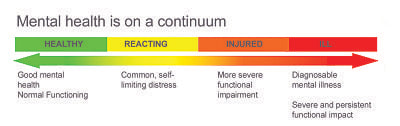 environmental backdropRight now, all of us are sharing a massive significant environmental variable that’s impacting our mental health—and that’s COVID-19. The impact of the pandemic is underlying all of the other things that impact us, including our biology. If we’re sick, if we have a flu, if we have a cold, that impacts our mental health. If we’re healthy and we’re exercising regularly, we’re active, that impacts our mental health and our mental health impacts our physical health as well. If we’re not feeling very happy about something, if we’re worried, if we’re depressed or down, that has a reflection in our physical capacities. We also see those same kinds of challenges with respect to our social environment. If everything is going well with our friends and our family and we’re regularly engaged, that also serves a protective function so that we’re more likely to feel physically healthy and we’re also more likely to feel psychologically healthy. Our biology, our psychology, and our social environment all come together on an overlapping Venn diagram that sits on top of our environmental stressors. it's not weaknessDr. Carleton informed listeners that it’s also important to remember that mental health has nothing to do with inherent weakness. “We have no evidence that says that there’s one gene or one feeling or one thought or one behavior or one experience that is solely responsible for our mental health or mental state. And certainly not for having difficulties with mental health,” he said. “When we talk about people who are having difficulties with mental health in most cases it’s a function of high stress or chronic strain or physical exhaustion and maladaptive coping all coming together to challenge an individual’s experience.” He pointed out that anyone can develop symptoms, saying, “At the end of the day, even the most resilient of us is still human. We still experience all kinds of highs and lows in our lives.” DEATHCARE AND MENTAL STRAINMoving on to talk about potentially psychologically traumatic events that might apply specifically to some of the work that deathcare professionals perform, Dr. Carleton spoke of experiencing, witnessing, or learning about something potentially injurious to a close relative or a friend that may cause mental health injury. He said that other potential events include repeated exposures to distressing details of significant threats such as exposure to war, threatened or actual physical assault or sexual violence, kidnapping, hostage-taking, torture, and mechanisms of severe physical injuries, like motor vehicle accidents and industrial accidents. “You’re exposed to these things because if someone dies as the function of one of these events, the last responder is you and so you are exposed to these on a regular basis,” he said. “As a species humans are generally resilient and adaptable. So even these kinds of events, when we’re exposed to them, we can bounce back, we can recover. Most stressors—even repeated exposures to these kinds of events—are not typically overwhelming. But you have to remember that our experience of whether something is overwhelming is influenced by our biology, our psychology, and our social environment, as well as what’s happening behind the scenes in our broader environmental variables.” Dr. Carleton was talking specifically about events that are potentially psychologically traumatic. He said that the most common thing we think of is post-traumatic stress disorder (PTSD) when we think about a mental health injury. PTSD can be one thing that happens following exposure to one or more potentially psychologically traumatic events where we don’t bounce back, where we aren’t able to be as resilient in that moment because of any number of things that have come together. It’s a mental health injury for which there are effective treatments that can provide symptom relief for a great many people and it’s one of the disorders that can follow exposure to the kinds of traumatic events Dr. Carleton listed. It’s also not the only mental health injury or disorder. Major depressive disorder is actually more common, even among people exposed to these ongoing potentially psychologically traumatic events. “There are also difficulties with substance abuse and dependence disorder,” Dr. Carleton explained. “You’re taking the substance for longer than you expected. You’re taking the substance in order to avoid or manage symptoms that you’re having or to change your emotional status. The problem isn’t necessarily volume. It can be the amount that someone’s consuming. But more often than not, the challenge can be that one drink might be too many and ten might not necessarily mean there’s a problem. It depends on how you’re using and what you’re using for. And if you’re using as a function of trying to manage other symptoms, that’s a good indicator that you can probably benefit from some additional support. It’s not the only indicator, but it’s certainly one of them.” Dr. Carleton underscored that only licensed qualified experienced persons can and should diagnose disorders or imply diagnosis. “Dr. Google gets us part of the way there in some cases, but that’s not super reliable,” he said. “If you’re looking for help with mental health or you’re concerned about your mental health, you want to talk to a registered, licensed, evidence-based mental health care provider who can provide you with information about where you’re at and possible solutions to get you to where you’d like to be.” SYMPTOMS AND WARNING SIGNSDr. Carleton turned to discussing some of the urgent warning signs and symptoms. First, he pointed out that if any symptom lasts longer than a week, at that point it’s a warning sign that your symptoms may benefit from some intervention, particularly difficulties with falling or staying asleep, intrusions, numbing, changes in your behavior, or sudden increases in substance use. Those are also potentially urgent warning signs and symptoms. Suicidality, homicidality, violence, or sudden dramatic increases in substance use should all be taken as urgent warning signs where it’s time to get in to see somebody soon. “It doesn’t mean necessarily that we need to call 911, although that is a possibility,” Dr. Carleton said. “It does mean that help is needed sooner rather than later.” HOW CAN MANAGERS AND COLLEAGUES SPOT SIGNS OF BURNOUT AND ENCOURAGE PEOPLE TO SEEK HELP? According to Dr. Carleton, the more open you keep communications, that peer connection, can help. But if you identify big behavior changes—someone normally jovial now lashes out, as an example—it’s a good indication that you should check in with them. The more engaged you are with your team with regular communication, the better positioned you are to support them. mental health is a journey“What can you do? Well, I think first and foremost it’s important to keep in mind that mental health is a journey, not a destination,” Dr. Carleton advised. “It’s not something you check off as a tick box because you did it well today, any more than physical health is.” He encourages deathcare professionals to monitor both their physical and their mental health. “We have tools that we make publicly and freely and anonymously available on our website for our public safety personnel, and those tools might be beneficial for you as well,” he offered. “They allow you to compare your responses to the general population, and, in doing so, you get immediate anonymous feedback that you can use to see where you are sitting relative to everybody else.” Because changing mental health requires culture change because of stigma and misinformation, it’s extremely difficult and takes a long time to accomplish. Dr. Carleton believes it’s important that we all pay attention to the idea that mental health is something we’re trying to change at a population level, but he pointed out that for people who are regularly exposed to potentially psychologically traumatic events, they may very well be forced to engage with culture change more directly than everybody else. He encouraged listeners to engage in ongoing monitoring regularly and get help sooner rather than later. self-careWhat can we do in addition to the monitoring? The doctor advised people to look to their social support. “Talk about your experiences. Not necessarily about the details of what happened in your job and specific day, but how you’re feeling and what else you’re doing in order to manage those feelings. If you’re having difficulties with the symptoms we’ve discussed, talk to family or friends. Make sure that you keep a regular diary so that you can watch what changes for you that supports or undermines your mental health.” “As cliche as this sounds—and it sounds cliche in part because we all keep saying it—engaging in regular healthy behaviors enhances your coping ability and helps to maintain your mental health,” he continued. “So, exercising regularly, even light exercise: simple walks, getting outdoors, 20 minutes. Any exercise at all tends to be beneficial as long as it’s regular.” Dr. Carleton added that people should watch what they eat. Eating healthy is important because the highs and lows of sugar affect your biology, which impacts your mental health as well. Substance use and misuse is much more problematic and a much more slippery slope than most people realize. If, for example, you’re using alcohol to manage your emotions, that’s a good indication that there’s a better set of skills you can access to manage those emotions. He also emphasized that, where possible, it was important to maintain routines, even in the face of COVID-19. “The more routines that you can build in, probably the better off you’re going to be, as long as those routines include strict work-life balance where possible,” Dr. Carleton said. “As a professor, I can tell you that the boundaries between my work and my life are permeable at times. They’re permeable most of the time, but it’s important to try and manage those separations because that’s what’s helping to protect and sustain your mental health. So making sure that you’re managing that is an important part of living an ongoing happy, healthy career.” Last but not least, Dr. Carleton addressed early evidence-based interventions. “Evidence-based interventions are evidence-based for a reason. It’s because they’re helpful. It’s because they’re beneficial and there’s proof, there’s research that says that they work.” He spoke of the importance of finding the right type of practitioner to offer those interventions. “Psychologists is a protected term. So is psychiatrist. But counselor, therapist, and healer are not protected, which means that anyone can take them—and there is a lot of variability among them. That doesn’t mean there’s not good counselors, therapists, and healers. It’s just that there are a lot fewer restrictions on those names and titles than there are on things like psychologist or psychiatrist. So I recommend you demand registered and licensed, experienced, evidence-based, empirically-supported mental health care (which is a mouthful!), but you can find that from colleges, registered provincial associations, and registered state associations.” HOW CAN WE SUPPORT EACH OTHER IN OUR OWN GRIEF?Dr. Carleton said that grief is a unique thing and shared the work of Dr. Katherine Shear on Complicated Grief. Grief is not something that’s clearly defined—you don’t have clear phases or end-point. Grief can last an entire lifetime, ebbing and flowing throughout, and in many cases it does. Grief in and of itself isn’t a problem, it’s not something to cure since it’s part of the human experience. If grief is leading to difficulties with destructive behaviors or debilitating, interfering with your job, then maybe seek help to better manage the symptoms of grief from an evidence-based professional. But grief is part of the human experience. While it’s not a pleasant emotion, it does also remind us to value all of the things we have right now because of the things we’ve lost before. With shorter days, family obligations, and a job that doesn’t recognize the change in seasons, the holidays can be the biggest strain on our profession. Combine that with a global pandemic and a surge in cases and taking care of yourself and your colleagues is more important than ever. With that in mind, Funeral Professionals Peer Support (FPPS) and CANA came together in mid-December of 2020 to help deathcare professionals gather the tools needed to keep working by offering a free webinar with expert presenters who shared strategies to address the challenges faced on the front lines during the winter months. CANA’s President W. Scott Smith addressed his experiences with the high number of COVID-19 cases in Texas. Dr. R. Nicholas Carleton, an expert on mental health on the front lines, highlighted strategies to identify problematic symptoms, suggested coping skills to help, and provided recommendations for engaging professional supports when needed. Visit goCANA.org/webinars to view a free, on-demand version of the complete webinar. Now, CANA and FPPS are coming together again to host a peer support meeting for deathcare professionals of all roles and experiences. Learn more about this meeting and mark June 22, 2021 on your calendar for this valuable meeting.
 A note before we begin: The assignment that this post references was completed before the coronavirus changed the way funeral homes and crematories could operate. However, students continue to complete this exercise each semester, and the responses do not change. As a result of the pandemic, CANA Members are much more dependent on phone and electronic communication to make successful arrangements and help their business succeed. The lessons learned from this assignment are still more relevant than ever. CANA is a membership association. All of the work we do is in support of our members, and that includes talking to consumers. One of the key benefits of CANA members is their listing in our provider directory, a valuable resource for both trade calls and also the general public. Consumers call us for many reasons: They need help locating a CANA member in their area. They have an imminent death and don’t know what questions to ask the funeral home or crematory. They had a bad experience or there’s something that just doesn’t feel right, and they need someone else to gut check them. But consumers also call CANA asking how they can avoid using a funeral director. They often tell us they want a direct cremation because they think this the way they can bypass using a funeral home. Now, we know this is not the only reason for choosing direct cremation, but it is definitely a factor for many. If you’re confused as to why consumers have this desire to “stick it to the man,” as some tell us, and steer clear of “the funeral director,” let me share a story that will shed some light on this issue. the assignmentI teach the Cremation Principles & Practices course for Worsham College’s online program. While there are many key ideas we try to impress on these future funeral directors, our focus in this blog post is how we teach them that customer service matters. The assignment is to pretend to be a consumer and phone shop at least three funeral homes for cremation services. They are instructed to ask three questions:
All of the funeral homes contacted as part of this first assignment were in Illinois. These seem like pretty straightforward questions, right? Well, for my first class in Spring 2019 this was a very painful exercise for these students, and the students in the courses since then have experienced the same thing. They think they are entering a profession where everyone cares as passionately as they do about helping families through a very traumatic event with compassion and respect. What they learned was that yes, in a lot of cases, this is true. There are some really great funeral homes and crematories out there who are compassionate, honest and welcoming. But they also learned that there are some businesses who are not, and many of the students ended up feeling anger, hurt and shock, as well as a determination to do things differently when it’s their turn. Below, I’ll share quotes from some of the students’ assignments. This post is much longer than usual entries in The Cremation Logs because we wanted to show you the details of this feedback. There were plenty of wonderful funeral homes who treated the students with respect and answered all their questions. But there were equally as many who did not, and that is what is concerning. To keep this blog to a reasonable length, we are only focusing on the negative experiences for purposes of education and continuous improvement. Responses are organized by the questions students were assigned to ask. Please keep in mind that the people answering the phone had no idea they were speaking to students — i.e., future colleagues. They thought they were talking to consumers. Which makes some of these responses all the more horrifying. It is also important to note that none of this feedback was provided to the funeral homes called by the students, and no action was taken in regards to the violations we’ll discuss. This was an educational opportunity, not a scheme to catch any bad actors. "What is the cost for cremation?"Here are some of the students’ stories related to the question of the price for a cremation.
Wow. Just, wow. Can you identify the mistakes these funeral directors made? First, let’s be clear that the Federal Trade Commission (FTC) says “You must give consumers who telephone your place of business and ask about your prices or offerings accurate information from your General Price List, Casket Price List, and Outer Burial Container Price list.” They also include a note that “You cannot require callers to give their names, addresses, or phone numbers before you give them the requested information. You can ask callers to identify themselves, but you still must answer their questions even if they refuse to do so. You cannot require consumers to come to the funeral home in person to get price information.” In an opinion letter dated March 18, 2009, the FTC also says that “It is a violation of the Funeral Rule for a funeral provider to refuse to provide price information by telephone upon request to any person for any reason.” Clearly, we see evidence of several violations of the Funeral Rule in the examples above. In the same opinion letter from 2009, the FTC explains that one of the Rule’s primary goals is to allow for comparison shopping. Make no mistake, if a consumer calls you and you refuse to give them price information over the phone, they will call someone else. And the person they choose will be the business that was transparent and gave them the information they asked for; they will not come and see you just to get pricing. Finally, let’s address the situation where the student was directed to the website by three firms, with instructions to call back if there were additional questions. The person called you for a reason. Maybe they don’t have a computer; maybe they need to make a quick decision and don’t have time to search the website for pricing information and decipher the packages available; or, maybe they just prefer to talk to someone. Pushing them off to the website is not the right approach. They will not call you back. They’ll call someone else who will talk to them. And remember, this would be considered a violation of the Funeral Rule. Answer their price questions, and then invite them to visit your website or your location for more information. "Do you have a crematory on-site?"Responses to the next question surprised the students. Some of them had assumed that if a business has the word “cremation” or “crematory” in its name, they have a crematory on site. I bet many consumers make the same assumption and believe that their loved one never leaves your building until they pick up the cremated remains. Here’s what the students reported from the question about whether the crematory was on-site and if they could see a picture, or who provided the cremation service if there was no crematory on-site.
Why the secrecy? It’s exactly this kind of behavior that causes consumers to mistrust funeral directors. And with the high level of mistrust that exists right now, consumers want to know they are getting their loved one’s remains back, so they are asking questions and doing their research. The best way to assure them they can trust you is to be transparent. If you use a third-party crematory, there should be no fear that the consumer is going to go directly to them. They can’t. They simply want to know what’s going to happen to their loved one. So be ready to explain your chain of custody procedures to families, and, if that includes using a third-party crematory, then be ready to explain what procedures are followed to make sure they are getting their loved one back. “CAN YOU SEND A PHOTO OF THE WITNESS AREA?”The students were also instructed to ask if they could see a picture, or visit in-person, the area where a family would witness a cremation. Here are some of the things the students reported about the firms they called:
I’ll start by dispensing with the one statement that was a complete lie: It is NOT against Illinois law for the cremation to be watched by the public. If the family wants to participate, there is no law or regulation prohibiting it. Now, a company may have a policy that they don’t allow it. That is a business decision. But don’t lie to the consumer. If you don’t offer it, just say so. Now, on to the bigger issue. It’s entirely possible that these firms have crematories on-site, but don’t have the space or the option to add a viewing area. We get it. But based on the answers provided during the phone calls, that doesn’t seem to be the case. So, the question now is “Why not offer witnessing?” And if you do, why would you be reluctant to share that information over the phone? It doesn’t matter if you don’t have a crematory on-site. Many third-party crematories offer a witnessing area for their funeral home partners to bring families. As we mentioned in the previous section, families want to know what is going to happen to their loved one, and they want to make sure they are getting their loved one’s remains back. That is one of the biggest reasons why people choose to witness a cremation — peace of mind. And isn’t that one of your goals as a funeral director? To give families peace of mind during an emotional and sometimes very confusing time? If a family wants to witness their loved one’s cremation, they will find a place that offers it. And they are willing to pay for that option. Families are willing to pay for a lot of things if they find value in it. If you aren’t making plans to incorporate witnessing into your offerings, please don’t ignore this growing trend. General Customer serviceFinally, I’d like to share some general customer service observations made by the students during this assignment. Most of them speak for themselves.
As I mentioned in the beginning, this was a painful lesson for both the students and for me. I was angry on behalf of my students, many of whom were treated horribly. But I was also angry on behalf of consumers. These funeral homes believed they were speaking to consumers. Yet they lied, were rude, broke rules and generally did not represent the profession well at all. It is not our place to judge why someone wants what they want, nor convince them they want or need something different. This is exactly why consumers want to “avoid the funeral director” — they do not want to be sold on something they don’t want. That’s why online funeral arrangements are growing in popularity. You pick out exactly what you want, and no one is on the other end trying to convince you to get something else. I will also reiterate that we know of so many amazing providers who do represent the profession well through their unending compassion and willingness to get to “yes” and give consumers what they want. All of the CANA staff have been on the receiving end of that compassion as we’ve engaged their help in dealing with our own family deaths. I can only hope that these are the providers consumers call, and we eliminate the poor practices represented in this post. Think this couldn’t happen in your firm? Think again. These are rural, suburban and urban firms, in the towns where the students live. Some of these firms were CANA members. The common thread among them was a bias against cremation. Even if you provide regular staff training on how to respond to phone inquiries, it’s still important to “inspect what you expect.” Engage a family member or friend to phone shop your own company and see how your employees are responding when you aren’t around. If your staff doesn’t provide information in the manner you prefer, and you decide remedial training would be a good idea, CANA offers an online Cremation Phone Shoppers course that reviews all the best practices and gives tips on how to respond to different questions. CANA's Cremation Phone Shoppers course helps you make your best first impression when your only resources are your voice and your time. Available online, on-demand, on your device, and at your pace with CE from The Academy of Professional Funeral Service Practice. And coming soon to CANA’s Online Education catalog, Complying with the FTC Funeral Rule clarifies the responsibilities that funeral homes, cemeteries, and crematories have in serving their communities. Learn more: goCANA.org/eduonline Want to learn more about witness areas and viewing rooms? CANA Members should check out “Welcome to the Viewing Room” from Vol. 55, No. 3 of The Cremationist. The article is filled with stories from CANA Members on how they turned what is often an industrial-looking room into a bit of comfort and solace for the cremation families they serve. Each one features photos of these rooms and ideas on how they talk to families about the witness area and the peace of mind it can offer.
 “2020 was like looking both ways to cross the street and getting hit by a plane.” That is my favorite joke describing 2020. It’s funny because it’s true. The pandemic spread of COVID-19 came out of nowhere and changed everything and everyone. Our best intentions, planning and hard work could not have prepared us for the challenges of a triple pandemic – disease, social turmoil, and political unrest. When faced with uncertainty and continuous change, I have been amazed by how quickly and well CANA members have adapted, particularly in responding to trends that were impacting funeral service before the pandemic and will continue to be important in the year to come. Reflecting on 2020, it seems clear that death care workers returned to fundamentals to find solutions for dealing with such cataclysmic change. Now, as we start 2021, we can take a moment to set goals and priorities to meet the challenges to come. CANA cohosted a webinar in 2020 with DISRUPT Media during which we asked industry experts to comment on key trends. Some of those pearls of wisdom are included throughout this post. rising cremation ratesCremation rates have been rising steadily and predictably at an average of 1.5% nationally for the past decade. That predictability has now come to an end. All of the reasons people chose cremation before, remain true: price, convenience, possession, seeking new traditions. Those reasons plus more than 300,000 excess deaths in the United States alone have resulted in a jump in cremation numbers and rates. “So we’re getting a taste of what that’s going to look like in our industry. And for the next 20 years, you’ve got this spike in crude death rate, then you also have an acute rise in cremation rate that’s going to take place during the same time. You also have a decrease in religiosity and the value of service… as an increase in Nones and a decrease in overall people who claim Christianity. So, how does that impact service and how does that impact your margin? If we’re not making sure that we build value and we build relationships and we build a service offering around a model that really speaks to the consumers’ needs and wants, then we’ll find ourselves not really being funeral service providers anymore, but being more like just disposition order takers. It’s going to be scary.” – Rahsaan Brown As cremation rates have become the majority of dispositions, funeral homes and cemeteries have struggled to offer new, personalized services that demonstrate value to the cremation customer. Funeral professionals bemoan the DCRTF (direct cremation, return to family) phenomenon, but too often aren’t engaging with families to see what they would value or assistance or expertise that would be helpful. This trend has increased during the pandemic, not just because of consumer choice, but also because of safety concerns around gatherings. “Most funeral homes just went through an increase in volume. Not necessarily profit, but in volume. Anytime you have an increase, what comes after? We could have some days that could be less than what you had expected. So now is the time, when you’re catching your breath, to train your staff, to redo your general price list, to get your overheads in line. Train, get prepared, because it’s an ongoing battle. There may be some days that are light and some days that are heavy, but the bottom line—it doesn’t stop. I think the well-prepared funeral homes are taking in all the things [we’ve learned] to be strong so that they can meet the future needs.” – Jeff Harbeson The trends we watched pre-pandemic are more impactful than ever. What is the path forward? I encourage you to make 2021 the year to shore up your foundations to position your company for success. technologyAs recently as February 2020 (at the CANA Cremation Symposium) we were discussing incremental change to serve families. We had no way of knowing that days later the world would turn upside down. Seemingly overnight, funeral directors pivoted to offer livestreamed services, online and phone arrangements, and new strategies to manage staff and operations remotely. Many of these early activities were conducted with no more sophisticated equipment than smart phones. We have come a long way since then, or have we? This is the year to upgrade your technology game. Everything from arrangements to funerals to continuing education will continue to be offered online. Invest in stable, fast internet and computers with web cameras sooner rather than later. Software advances can help with everything from case management to first calls and staff coordination. Grow your online offerings to meet the consumer where they are. “We’ve got to continue to provide ways for the consumer to connect with funeral homes on their own terms and in their own way. That’s something that, as a profession, historically we’ve not been great at. There’s been one way for consumers to connect with funeral homes and cemeteries and cremation companies: we’ve relied on people just walking through the door as a way to grow market share and serve a consumer that now is more remote than ever. 80% of funeral home business is relationship-driven. From a marketing perspective, that relationship conversation has to be a focus of the marketing to continue to build those relationships and make that line of communication even more open.” – Ryan Thogmartin Technology will remain the key to brand awareness and marketing success as well. But beware that you will sell what you market. If you are promoting low-cost, minimal service cremations online and via social media, that is what they’ll buy. Now is the time to use these platforms to educate your communities about the services you can (safely) offer with the help of technology and your facilities. Also, amplify local news on your social media channels. Facebook is the host for most local news and outlets and governments. Even in large cities, neighborhoods will have Facebook pages. We are spending more time online during the pandemic than ever before, and good news stands out. Let your feed be the bright spot as well as source for obituaries and practical tips. You offer solutions to problems that death-averse consumers weren’t willing to discuss or plan for nine months ago. Preneed sales have increased during the pandemic, but have you effectively communicated your ability to help them discuss and make plans? Your creativity and problem-solving are your best assets, and your communities need you now more than ever. “We have said all along that a lot of those immediate disposition families that walk out of the door with their urn in their hand are doing so because they’ve seen our product and it sucks and they know it and they’re not going to pay for something that doesn’t speak to them. And so, as we adapt to the growing number of Nones—they are now the largest group; they are at 26%, above Catholics and Protestants. They’re not going to go away. They’re going to continue to grow. As we look at those families who, just like you, are looking for something different and unique, we have got to find those skills or those people… Part of our job right now is bringing people back. Those people who had to have a very minimal service because of lock down, inviting them to come back and inviting them to have a creative experience after the fact. Don’t sit and wait for the phone to ring. They’re not going to call and say, ‘Hey, I’m ready to have a funeral.’ You’re going to have to reach out to them and say, ‘Now, are you ready to have a chance to honor your mom that you didn’t get to do?’” – Glenda Stansbury When my grandmother died in March and we had a livestreamed graveside and Zoom celebration of her life, we discussed gathering over the summer to have a family reunion in her honor. Needless to say that didn’t happen, and we aren’t going to gather this year or probably ever for that purpose. I gave the funeral home a 5-star review on Google, however they returned thousands of dollars of preneed funds earmarked for the funeral to the estate. How many families have you served in a similar situation? How many have come back to do that delayed service? Or did they simply make do? Have we accelerated the trend toward cremation without services by funeral professionals? Only time will tell. Human beings are strange creatures – we crave what we can’t have – so it is quite possible that when funerals are permitted, there will be an increase. In the meantime, many CANA members have offered community-based memorial services. Some these are purely virtual, some are a hybrid of small in-person gathering with livecasting. I watched several in November and December and each acknowledged that we are grieving more than the loss of loved ones. That was a welcome and comforting message. setting prioritiesThe stats on people accomplishing New Year’s resolutions is depressingly low, however goal setting is still valuable and really the best way to track success. We see gaps in service and opportunities for improvement during our busy times, precisely when there is no time to tackle a new project. So write your ideas down and keep track of them. A break will come and that is the perfect time to set your priorities for new projects or improved procedures. Did you always mean to start an aftercare program? Get on it! Still not sure how to understand all of the financial data and business metrics? Set up a meeting with your accountant or take a class. Still not sure what social media can do for your business? Ask for help and try a campaign. Make relevant continuing education a priority for all of your staff and yourself. Set goals and measure progress toward them. Then celebrate your successes. This is the best way to focus on the important and not just the urgent. “I truly believe that the message for all of us in the profession is that old song: ‘You don’t know what you got ‘til it’s gone.’ To me, that’s one of the most inspiring things and something I’m going to take forward... I think it’s important for us to look at it as we’re leading the consumer. You have to meet them where they are, but all of us as a profession need to look just a little far ahead of them so that we can be there when they get there. That’s something I think we missed with the ‘increase in preference for cremation as disposition.’ We did not look ahead enough and we didn’t pay attention to the trends so that when that consumer came in and said, ‘This is what I want,’ we were prepared to help them on their terms. So those are the takeaways that I took today and hopefully others can think about and use to improve their businesses.” – Dean Lambert staffingConventional wisdom has long said that 50% of funeral directors leave the profession before their fifth anniversary. Emerging research coming this year from the American Board of Funeral Service Education (ABFSE) has disputed that number and findings show it’s lower, closer to 30%. Either way you look at it, funeral directors are struggling with long hours, low wages and difficult work. Your people are your most important asset, including yourself. You were likely busier than ever in 2020 with deaths predicted to be as much as 20% more than 2019. That is a lot of cases to handle with families to serve while you work within changing restrictions. What are you doing to promote resilience for your team? Is mental health, depression and burnout a topic of discussion? “You talk about margin, you talk about impact, you know, we’re talking about a crude death rate and all this stuff from the external customer’s perspective. But what about the internal customer? Have you taken care of your staff and created protective policies to ensure their good health?... We’ve got to put those policies in place and make sure that our people are okay, because what is the financial impact to losing a funeral director because they got burned out? How does that impact margin? How does that impact your overall business to have to now go and recruit? It’s already pretty scarce, to find licensed professionals that are competent and that you can feel confident in. What happens when you lose someone because of COVID? “The other flip side of it is, as business owners and funeral home owners, we have to also take care of ourselves. I look at all the owners and founders and CEOs and business professionals that are over the age of 55 that are having burnout issues and checking out. That’s another customer that we’ve got to spend some time focusing on. As we see more cases, we can make some adjustments to the value offering and we can stay profitable—but we have to be here. We have to survive and we have to make sure that our team, our staff, survives and thrives during this time to be able to implement those adaptations and evolutions to the model.” – Rahsaan Brown Now, we’re facing a new calendar year, but this real-time, continuous risk management experiment that we are living has not gone away. Hopefully, we will soon have new tools to combat the disease, like easier access to PPE and vaccines, and also to support ourselves and each other. We have learned to safely serve our communities through deadly viruses before, and COVID-19, too, will likely remain with us. PPE works, and – with continued engagement and creativity – we will find the tools to serve our communities and navigate 2021. My thoughts are with you during the next phase of this continuing crisis. On behalf of the staff and leadership of the Cremation Association of North America, happy new year. This post excerpted from the “What’s Ahead for Funeral Service” cover story in the January 2021 issue of American Funeral Director published by Kates-Boylston and comments from industry experts during the WTF?: What’s the Future of Funerals webinar on October 14, 2020. You can watch the complete recording of this webinar and many others on-demand on CANA’s website: goCANA.org/webinars. CANA Members, we featured the highlights from this webinar in Volume 56, Issue 4 of The Cremationist – you can read the full issue on our website with your member credentials. Not a member yet? See the other benefits of CANA Membership here.
WEBINAR EXCERPTS FROM NOTABLE INDUSTRY EXPERTS:
Rahsaan Brown is CEO and owner of Blue Nebula Consulting, a nationally scaled organization that focuses on assisting funeral homes build their sales and marketing departments. Jeff Harbeson, a.k.a. the Funeral Commander, is the Director of Cash Flow Solutions at C&J Financial, where his specialty is producing accounts receivables and increasing cash flow. He is a former funeral home owner. Ryan Thogmartin of DISRUPT Media is CEO of ConnectingDirectors.com, Price My Funeral, and Death Care Jobs, as well as the Funeral Nation co-host, along with Jeff Harbeson. Glenda Stansbury is the vice president of InsightBooks, a publisher of books on grief and aftercare. She is also a licensed funeral director and embalmer. She is the co-founder and the trainer for certified celebrant training. Dean Lambert is the Marketing Communications Officer for Homesteaders Life Company and has been with them for a little over 22 years. He’s worked with funeral homes to help with marketing, communications, and promotions since 1991, so he’s approaching his 30th year with the profession.  In June, the United States Supreme Court ended its 2019-2020 Term by announcing its rulings in several monumental and far-reaching cases. Bostock v. Clayton County, Ga., one of the most widely discussed cases of the Term and, perhaps, the most likely of the Court’s opinions to touch on everyday life, involved employment discrimination claims by fired gay and transgender employees – including a transgender funeral director. In Bostock, the Court sought to resolve a disagreement among lower courts about whether Title VII of the Civil Rights Act of 1964, which prohibits sex discrimination, also prohibited discrimination on the basis of sexual orientation or gender identity. With a 6-3 majority, the Court held that, under the law’s broad language, “[a]n employer who fires an individual merely for being gay or transgender defies the law.” the underlying casesIn deciding Bostock, the Court considered a trio of cases: two involving gay men – Gerald Bostock, who was fired from his job as a child welfare advocate in Clayton County, Georgia, and Donald Zarda, who was fired as a skydiving instructor in New York – and one involving a transgender woman. All three plaintiffs were longtime employees who were fired shortly after their employer learned of their orientation or gender identity—this was allegedly the only basis for the employee’s termination. Much of the attention surrounding Bostock has focused on Aimee Stephens, a transgender woman who was fired from her job as a funeral director in Michigan after notifying her employer that she intended to “live and work full-time as a woman.” Stephens began working at R.G. & G.R Harris Funeral Homes, Inc. as an apprentice before becoming a funeral director/embalmer. During her employment, Stephens presented as a man and used her then-legal name, William Stephens. Before departing on a vacation, Stephens gave her employer a letter that stated that she had struggled with “a gender identity disorder” her entire life, and that she had “decided to become the person that [her] mind already [was].” As part of this decision, she informed her employer that, after her vacation, she would return “as [her] true self…in appropriate business attire.” Though her employer was not religiously affiliated, the owner stated that he had been “called [by God] …to serve grieving people” and that his life’s purpose was “to minister to the grieving.” In line with his faith, he informed Stephens that her proposal was “not going to work out” and fired her. In the underlying case, her employer testified that he believed that “permit[ting] one of [the funeral home’s] male funeral directors to wear the uniform for female funeral directors at work” would make him complicit “in supporting the idea that sex is a changeable social construct rather than an immutable God-given gift.” the supreme court's rulingIn the cases before the Supreme Court, all three employers acknowledged that they had terminated their employees for being homosexual or transgender, a fact many plaintiffs often struggle to establish in court. The employers argued, however, that Title VII’s bar on some forms of employment discrimination did not prohibit them from taking such an action. Passed in 1964, Title VII prohibits an employer from discriminating against an individual “because of [the] individual’s race, color, religion, sex, or national origin.” Under the law, to “discriminate against” means to treat an individual employee worse than other employees who are otherwise similarly situated to the employee. By prohibiting discrimination “because of” sex, for example, the law prohibits sex from being a “but-for” cause of the employer’s action. That is, the employer would not have taken the adverse action in the absence of, but-for, the employee’s classification (i.e., sex). In sum, the law prohibits an employer from considering an employee’s sex when taking an adverse employment action (e.g., firing the employee). This is true even if sex is not the sole or even primary cause of the adverse action—the law prohibits sex from being a factor at all. Though the law does not explicitly identify “sexual orientation” or “gender identity” as protected categories, in Bostock, the Supreme Court determined that discrimination based on these categories was prohibited by Title VII because it is impossible to separate them from sex: an employer who fires an employee for being homosexual or transgender necessarily and intentionally does so, at least in part, based on the employee’s sex. This is so, the Court stated, because in taking its action, the employer is applying sex-based rules or stereotypes, and, thus, is discriminating based on sex. To explain the concept, the Court used the example of two employees who are both attracted to men. In the employer’s eyes, the employees are nearly identical in all respects except one is a man and the other a woman. If the employer fires the male employee for no other reason than the fact that he is a man that is attracted to men, the employer has necessarily discriminated against the male employee for exhibiting traits or actions that it tolerates in the female colleague. This is prohibited by Title VII. The Court acknowledged that several questions remained unanswered by its decision; most notably, the boundaries between Title VII and the Religious Freedom Restoration Act, which prohibits the federal government from “substantially burdening” a person’s exercise of religion in many cases. Aimee Stephen’s employer initially raised the law but did not appeal an earlier, adverse lower court ruling to the Supreme Court. what does it mean?In some parts of the country, Bostock should have little practical effect: 22 states already had laws in place that prohibited discrimination based on sexual orientation or gender identity. The ruling, however, now removes any doubt about Title VII’s applicability and prohibits discrimination based on sexual orientation or gender identity at all entities covered by the law; generally, “employers” with at least fifteen employees. Though each workplace is different, following the Court’s ruling, employers should take a moment to: REVIEW PRACTICES. Review practices, policies, and procedures (including employee handbooks) to ensure that they reflect the current law. If not already explicit, anti-discrimination and anti-harassment policies should be revised to specifically prohibit discrimination on the basis of sexual orientation or gender identity. REVIEW UNIFORM REQUIREMENTS. In a lower court opinion, it was noted that Aimee Stephens had been fired after notifying her employer that she would begin wearing a skirt, and her employer testified that he disagreed with Stephens’ decision to “dress like a woman,” and fired her, in part, because of it. Though not expressly addressed by Bostock, the opinion indicates that gender-specific uniforms or workplace attire requirements will likely be viewed skeptically. TRAIN WORKERS. Ensure that employees, especially managers and supervisors, have been trained regarding anti-discrimination and anti-harassment policies and will act to stop discrimination in the workplace. Employers can be held vicariously liable for the actions of their employees. If a supervisor objects or refuses to ensure that the workplace remains free of discrimination, employers should consider whether the risk of creating a demoralized or hostile workplace, or the risk of litigation, is worth the supervisor’s continued employment. EXAMINE EMPLOYEE BENEFITS. Less formal benefits should be reviewed. In a lower court opinion, it was noted that Aimee Stephens’ employer provided clothing allowances to public-facing male employees but did not provide an allowance for public-facing female employees. Employers should ensure that benefits such as these are equally available regardless of gender. Excerpted from The Cremationist, Vol 56, Issue 3: “Taking Stock of Bostock: What it Means for You” by Christopher R. Jackson. Members can read this article and much more in The Cremationist archive. Not a member? Consider joining your business to access this and all archives of The Cremationist plus the many resources referenced here to help you find solutions for all aspects of your business – only $495. For additional information regarding the effect of the Bostock opinion and how it may affect you, please use your CANA member legal benefits and contact Chris Jackson directly. CANA Members can contact CANA Legal Counsel Lara M. Price, shareholder at Sheehy, Ware, Pappas, P.C., for complimentary 30-minute consultation each month.
 Funeral professionals have a challenging job under normal circumstances; these are not normal circumstances. Covid-19 has simply turned the world upside down. As a psychologist who works with funeral homes and also works in one, I want to offer several suggestions for dealing with the additional stress created by the current epidemic. Many of these ideas come from my work on the Finding Resilience program sponsored by Homesteaders. You can download free materials here. Professionals in a wide variety of fields consider it a badge of honor to wear many hats in their business. However, I don’t know of any professionals who wear more hats than funeral directors. Within a single week, you might be expected to demonstrate knowledge of:
In the last few months, you have also had to add “remote videographer,” “social distancing expert,” “Covid-19 expert,” and “creative rituals coordinator”. Not only are all of these duties happening under significant time pressure, but also in the midst of continually changing state and local regulations. It’s no wonder that funeral directors are feeling the effects of compassion fatigue and/or burnout. Ideally it is best to make relatively small changes to reduce feelings of burnout before it becomes overwhelming. These changes may include hiring additional staff, delegating responsibilities to others, or finding a colleague to cover during much-needed time off. Funeral professionals experiencing profound burnout, anxiety or depression may seek professional help from their physician or a therapist. Hopefully, you may only need a few “course adjustments” to keep you on a productive, lower-stress path. Here are my suggestions for reducing stress under normal circumstances as well as during the current crisis. say "no" to non-essential tasksEspecially now, there are going to be some tasks that should be postponed. There may be certain types of long-range planning or reviewing production options that are best left to another time. Even better, it is an ideal time to eliminate some of your daily and weekly tasks that don’t impact your business operations or your quality of service to families. I call this process “smart subtraction”. By reviewing your daily and weekly schedule, you may find tasks that can be eliminated, automated, or outsourced. make sleep a priorityMy work schedule has shifted. I have tried to have “fun nights” with my wife and three daughters, and I have had to adjust to extended family living with us for the last two months. This has destroyed my regular sleep schedule (and I don’t even have to go on middle-of-the-night death calls). When you add the economic stress and uncertainty to changes in daily habits, it is difficult to stay on a regular schedule and get quality sleep. Here are a few tips to help make it more likely that you can fall asleep.
write it downRecording thoughts and experiences – especially about things that inspire gratitude – can be helpful for people who routinely experience stressful workplace situations. This does not have to be a regular journal or even complete sentences. Doodling and writing short bulleted lists of your thoughts and feelings can work just as well. Don't just do something, sit therePracticing meditation and mindful activities can often seem so counter-intuitive. When my thoughts are racing around my brain at record speed, it can be difficult to be still and try to not think of anything. Thankfully, there are many different forms of mindfulness and meditation. It can help to try a meditation app or focus on slow, deep breathing. Mindfulness can also come from your religious practices such as focusing on meaningful scripture. Establishing a regular time to practice mindfulness can train your brain to transition more quickly. listen to musicI am “old school” when it comes to music. I still have a large pack of CDs in my car and I actually listen to them. I have one CD with “In Case of Spiritual Emergency” written on it. It’s a personal compilation of Eric Clapton, Paul Simon, John Hiatt, Mary Chapin Carpenter, and other favorites. I never cease to be amazed at how the right songs can lift my mood, refocus my mind, and give me a more balanced perspective. I’m not sure what should be on your “In Case of Spiritual Emergency” CD, but I encourage you to create that playlist. know you are neededI have been talking with many funeral professionals across the country and the most consistent reactions I hear include sadness. Funeral professionals are feeling sad that they are not able to provide the full range of funeral rituals and events to bereaved families. They are sad that people are dying alone. And they are sad that families are not receiving the benefits of funeral rituals including support and healing. I know you can’t do your job the way you would like, but please know that you continue to provide an invaluable service. You may not be able to give someone a hug, but your simple presence and compassion (even if expressed through a video chat) are still a vital service to grieving families. Thank you for the sacrifices of your own potential safety to serve others. Thank you for the innovative ways you have created to meet the needs of the bereaved. Do your best to care for yourself. The world needs you more than ever. Jason Troyer, PhD., specializes in helping death care professionals serve their families better. Additional resources unique to death care are available in his Finding Resilience program. Circumstances like a pandemic require extra care for yourself and your colleagues. "Stress prevention and management is critical for responders to stay well and to continue to help in the situation." Use the support resources from the CDC available by both call and text, and work together to stay healthy.
 CANA was proud to welcome the Millennial Directors, Zach Carnley and Matthew Morian, to the CANA stage at the 2019 Cremation Symposium. With Glenda Stansbury representing the Baby Boomers, this panel talked about our changing workforce and generations working together. They discussed navigating culture clashes, learning new ways of communicating (both language and mode), and the kinds of experiences one should have to earn their spot on the team. After leaving Las Vegas, the Millennial Directors weren’t done. In the past few years, they’ve spoken about their experience on many associations’ stages. We asked them to write a definitive millennials-in-the-workplace post, putting the topic to bed. After all, they're here, they're in their thirties, —and what are employers’ other options, really? As we examine the millennial experience in the workplace—their search for a suitable work environment and their growth and leadership goals—we hope this post can both inform older generations of readers, and also encourage the younger generations to keep working to find their place in funeral service. I have been fortunate enough in my career as a funeral professional to be involved in many different wonderful organizations. Credit goes to each of my employers who gave me the opportunity to have a voice and to speak on a topic that is near and dear to my heart. We all know that millennials are the bulk of our profession and steadily becoming the bulk of the families we serve. With that said, I have spoken in front of a few organizations on the best way to work together and blend generations to make the business more productive. During many of these presentations, I have asked for audience participation—and participate they did! the perceptionMost everyone—millennials included—has quite a few thoughts on how they should work and the tasks they are given. I have heard everything from, “Millennials are extremely lazy, spending all day on their phone,” to “They are the most goal-oriented, outside-of-the-box thinking and solution-solving generation out there.” Most people I talked to would rather have a dedicated, creative millennial than a traditionalist because, for the most part, they are thinking of ways to better themselves and your business. True, some are there to put in only the bare minimum of what is requested, but you will find that all across the board. In my presentations, I focus on the expectations millennials have of their employers: a fair schedule, decent pay, typical perks such as insurance and retirement, and room to introduce new ideas. I also speak on how we must focus our efforts as leaders to hone in on what they bring to the table and simply not make them “pay their dues.” the solutionAs I said, I have been given almost carte blanche with most of my employers to focus on finding ways to better serve families. That is the attitude leaders need to have towards their millennial employees. Obviously, it’s the leader’s job to make sure these ideas are carried out efficiently with respect to the business. I have always considered it a blessing to get to travel around and be involved in numerous organizations and to socialize and learn from people who have been out there doing it. I hope to keep this up, because I always want to be up to speed on the latest our profession has to offer, both for the business I serve and, of course, the families I serve. I wish many more employers would jump on board with this thought process. You must give your employees the opportunity to spread their wings and attend conventions, conferences, and educational seminars. They will learn so much more from other funeral professionals, things that they can bring back and put directly into action. The reality of it is there are so many scholarships out there that most people can attend these events at little cost. It’s is our job as leaders to send our people to these events and help them grow as professionals, which in turn will help you to grow your business. - ZACH CARNLEY company cultureIf you are wondering how to attract millennials to your business, then you have to ask yourself, “What do they really want?” I believe what millennials yearn for most in our profession is a healthy work environment. They desire a workplace that has strong leadership, a flexible schedule, and a solid company culture. MISSION-DRIVEN Company culture should be a top priority for any funeral home. Whether you are a family owned firm or part of a large corporation, it is important for your coworkers to know why you do what you do. A company’s culture is often made up of three key components: their values, their mission, and their vision. A company’s vision is essentially their long term goal as a business. It will not typically change overtime as it should be something you continuously strive to achieve. Your mission is what you do every day to help attain your company vision. It is what defines your enterprise to the world. Your values are then an outline of the intended character of your coworkers. If an employee lives by the values you set forth then they are carrying out your mission and will ultimately fulfill your vision. A funeral home with a solid company culture is one with a future in which millennials can see themselves being an integral part of. FLEXIBLE Having a flexible schedule is another trait of a healthy work environment. A flexible schedule in our industry is a difficult task to tackle. To attempt to detail it would require an additional blog post. Simply stated: a flexible schedule allows for a work-life balance that decreases the likelihood of employee burnout over time. For millennials, it may mean the ability to go their child’s tee-ball game or to go to a concert during their normal shift. Without tipping the scales too far for any one person, a leader should do their best to accommodate their colleagues instead of making it more difficult for them to find that balance. The results will be better morale and a willingness to go the extra mile for the company because the company went the extra mile for them. STRONG LEADERS In order to maintain a flexible schedule and support a company culture, you have to have strong leaders. Leaders do not have to be managers or supervisors. Those titles can be bestowed and stripped away without any discernible change occurring. A leader is one who cares for and supports those around them. They help others succeed and become the best they can be for the sake of the company, not for themselves. Luckily, leadership can be learned! It is a skill that can be honed with practice. If you have the heart to serve (you’d hope so, working at a funeral home) then you have what it takes to lead. Set a good example with your actions. Set an even better example through your interactions with your coworkers. Stay positive and motivate others to do the same and you’ll see a healthy work environment begin to flourish. With that, you’ll have an inbox full of resumes from millennials in no time. - MATTHEW MORIAN You can listen to the full panel in "Professor B and the Y-Men: Mentoring the Next Generation of Heroes" with Glenda Stansbury & Zach Carnley, and Matt Morian from CANA's 2019 Cremation Symposium, and our other presenters, for just $100. Visit goCANA.org/CANAheroes to learn more.
 In 2020, maintaining and keeping good quality talent on your team isn’t just a want, it’s an absolute need. It’s what’s going to determine your success and the foundation of your business moving into this next decade. This next generation needs a purpose, something that fires them up and gets them out of bed in the morning. Yes, millennials want to make a living, but they want to make a meaningful living. According to Forbes, millennials ranked meaningful work as one of the top needs they have from their workplace. the harsh reality“People don’t leave bad companies, they leave bad managers.” If leaders and those in positions of power can take this quote by Marcus Buckingham to heart, I believe we would see so much more retention amongst our profession. Here are some harsh realities:
These are some powerful statistics that mean if we aren’t encouraging a culture of growth, this next generation has no problem going to find it elsewhere. employee engagementHow connected do you think your employees are to your company? If we are being honest with ourselves, there are plenty of areas we can improve in this category. According to a study done by Gallup in 2017, 230,000 employees were surveyed in 142 countries on their current engagement. Employees fall into one of three categories:
Only 13% of employees they surveyed were truly passionate and motivated by the work they did every day. An astounding 63% were not engaged, and 24% were actively disengaged. The impact of a disengaged employee can negatively impact your business in the following ways:
Unfortunately, there isn’t much we can do about the actively disengaged. They just need a path out. However, the statistics show that around 63% have the potential to be engaged if we put the effort in to putting meaning behind what they are doing. What category would you put most of your employees in? Do they fall into the popular category not engaged? Maybe it’s time to rethink how you’re motivating your employees. Do you share a common purpose that they can buy into with passion? How often do you give praise? Could it be time to put more incentive compensation plans in place? Purpose and incentive are the keys to motivating engagement. Once we have worked to get our employees into the “engaged” category, the positive benefits have an astounding impact. Statistics show that 50% will post messages on social media and 24% are more likely to help boost sales than disengaged employees. Find ways to bring meaning back so that your employees live in the engaged category, and your firm is guaranteed to reap the benefits. create your planHIRE THE RIGHT PEOPLE Obviously, all this talk about having engaged employees is only possible if we hire the right people from the get-go that are naturally motivated. Service attitude is a big thing we look for at JCG. Recognize if they have the natural ability to go above and beyond to exceed a customer’s expectations. Are they good listeners, do they care, are they genuinely interested in other people and have a desire to always be learning? You can teach service aptitude (the ability recognize service opportunities), but you can’t teach attitude (the desire to serve). ONBOARDING AND TRAINING Develop a welcome program that makes them remember their first day. Decorate their desk with a welcome sign, write an internal spotlight, or take them to lunch with your team. Remember, their first day of work is one way to set the tone for their engagement. Spend a lot of effort on helping them to understand WHY you do what you do and how they bring value to that purpose. The first few weeks are critical to employee engagement. The more they buy in early, the more likely they are to want to stick around. Initial training an on-going training is essential to employee engagement. You must teach them skills to be successful. Have a minimum standard for customer service expectations in writing and don’t train just once. Reinforce the expectations as often as weekly. This includes modeling, observing, and measuring behavior. RETENTION AND RELATIONSHIPS Employees are more engaged when they are recognized, so communicate! Provide for feedback, and even ask for feedback yourself. Peer recognition is another way to keep employees engaged. Set up a quarterly award that gets everyone involved to recognize their peers. Feedback is the key, as this next generation craves it. So where should we start? A good place to assess where your engagement is at is to survey your staff about their happiness at work. Ask about if they feel valued, and if they appreciate the kind of feedback they get. It might be a rude awakening, but we all have to start somewhere. Getting the data is the only way you can grow from today into reaping the benefits of having engaged employees long into the future.  Want to learn more about increase employee engagement and improve customer service? Join Lori Salberg and more cremation rockstars in Las Vegas for CANA’s 2020 Cremation Symposium, February 26-28. Lori will present on “Developing a Collaborative Growth Culture” to re-invigorate organizations by fully engaging employees, improving performance of the business overall. See what else we have planned and register for CANA's 2020 Cremation Symposium: goCANA.org/CG
 “How long will my burial business last?” As I was writing this article, our eight-year-old grandson shed some light on the responses from – well an eight-year-old point of view. My wife, a former teacher, was helping him with his homework – a fair amount of math work and then onto the dreaded reading. Our grandson, who was about at his concentration limit for the moment, started playing a video game. When his grandmother mentioned reading a bit, his reply was surprising and unexpected. His delivery was neither harsh nor snippy. He merely said, “Maybe after this game or when I am dead.” In other words, my wife asked the question he did not want to hear and we got the answer that grandparents don’t want in return. Still, we found it quite funny, exactly framing his “not now” attitude. Discussions on changing consumer attitudes and funeral home finances today often elicit a similar response – not now. if not now, when?Earlier this year, a funeral home owner asked me, “How long will my burial business last?” On the surface some might scoff at such a question – too simplistic, too old school. I beg to differ. Looking at this question offers us an insight into the core revenue of a funeral home. The issue also allows me to re-address a topic I first covered several years ago. Ten years ago, a funeral home owner asking a question on “how long a burial business will last” would have delighted me! To hear it today is a bit disheartening yet shows that owners are finally thinking about the impact of cremation. After all the forewarnings from myself and others, funeral home owners finally now feel the revenue effects. Neither I nor others take delight in the ‘sudden realization’, but we fully understand the dilemma that you face. what to do?If you are a funeral home owner close to retirement, maybe the answer is to find a willing buyer. In our valuation work, we find that top-performing firms obtain the highest values. Top performers attract skilled staff and maintain their facilities meticulously. If your firm is not a top performer, you may want to change your management style. Many funeral home owners are not ready to retire. Funeral service may still be calling - kudos to you. What is the best course of action for those closely held to funeral service? There are a number of points to consider. REMODELING To be clear, I am not referring to remodeling the facilities (although that could be an issue too). In this case remodeling refers to remodeling the core business - a new business model, a business model based on the financial realities of a different revenue stream, probably with less revenue per call than in the past. STAFFING Much has been written about the current high employment rate and the difficulty in finding employees. Funeral service has its own challenges, which I hear about weekly – “There are no quality, qualified licensed funeral directors to be found.” Outside analysts agree that we are experiencing a shortage of trained personnel in funeral service and will for a number of years. Outside of raiding other funeral homes, attracting top-notch people to funeral service is one solution. Regulations need to change by accommodating quality personnel who may not want an embalmer’s license. OWNERSHIP SHIFTS A recent rush in acquisitions foretells the shift in funeral home ownership. Sixty-year-old-plus owners now face their own exit. Some are well prepared, but some are not. The consolidation of competitors began a few years ago and will continue for several years. This consolidation of owners, and perhaps rooftops, bodes well for the younger generation of owners. My 2015 estimate of 25% too many funeral homes in the U.S. needs to be updated, but I suspect that number has grown. Taking calls from declining firms or making prudent acquisitions ensures their success. However, successful owners must capture consumer needs today. CONSUMERS’ NEEDS Easier said than done, understanding consumers takes on critical importance. Without relying on casket and vault sales as the main revenue-driver, new-age owners will allow consumers to express their grief in new ways – ways driven more by consumers right now, than orchestrated solely by what was done in the past. Owners refusing to embrace the new consumer-driven business model can count their days by how many caskets they sell. If you did not watch the August 14, 2019 HBO special, Alternate Endings, find a way to view the show. The story of six endings contained several emotional departures from funeral service, but the biggest takeaway? While there may have been licensed funeral directors in the back stories, no funeral director took a vital role in these non-”traditional” funerals. The 2019 NFDA Consumer Survey found that 53% of those surveyed indicated that they could do their own funeral or memorial service, without a funeral director. Thankfully many client-families still want or need a funeral director but the HBO special and the NFDA survey point to what could be a rising number of people who don’t see a need to use you. How can we attract more interest in ceremonies recognizing a life lived? imagination gone wildFor nearly a century, funeral service hid behind the casket and vault sale. The loss of casket and outer burial container sales clearly reduces revenue. We must focus more on the personal side, making solid connections with consumers – no more just glad-handing family members as they come in the door – because, they may not come in the door. We must give them a reason that “remembering a loved one” is important. The move from merchandise-oriented to a service-oriented funeral business began many years ago in higher cremation areas. Now, the cremation upturn is hitting even the rural and largely unaffected areas. In a recent AARP magazine interview, musician Carlos Santana commented, “You stay relevant by trusting you have something people need.” Funeral business needs to specialize in service now or risk irrelevance. As the HBO special revealed, some consumers want a personal hand in a memorial (or living funeral). We have to help them truly capture the essence of their loved one. Making each funeral/memorial service special is the future of funeral service in my opinion. SUCCESS IN THE 2020SThemed good-byes represent one logical solution. Yes, they may take a lot more work than the old burial model, but they usually contain the “wow” factor for many consumers. Celebrants or celebrant-like ceremonies seem to make more connections as well. Look for off-menu choices that resonate with client-families. Let your imagination run wild and something magical may just happen. Success in the 2020s will be measured by story-telling, creating a compelling story about a loved one, a story even an eight-year-old can appreciate. Master-storytellers will excel. Our eight-year-old grandson was finally persuaded to read that book he discarded. He actually found it thought-provoking. It was a small history book from nearly 100 years ago. Things have changed dramatically since then — many advancements but many old beliefs dispelled. Losing 1.65 burial calls per 100 cases annually to cremation or $66,000+ over the next 10 years is not welcome news. Our 500-call funeral home owner exhibited the courage to ask the tough question. I hope he is ready for the answers. Are you? This post is excerpted from the full article “How Long Will My Burial Business Last?” originally published In Volume 16, Issue 3 of Directions by Nixon Consulting, Inc. This newsletter content and information is sent to clients and associates of Nixon Consulting, Inc. Published quarterly. Subscription is by Invitation only from NCi. Reproduced with permission of the author.
|
The Cremation Logs Blog
Cremation experts share the latest news, trends, and creative advice for industry professionals. Register or log in to subscribe and stay engaged with all things cremation. Categories
All
Archives
May 2024
|


|


|


|
|

|




 RSS Feed